
Last updated: 23 June 2026 · Prices verified from official track websites and booking platforms.
Gas-powered go karts deliver authentic racing performance through combustion engines that produce higher speeds and longer run times compared to electric alternatives. These machines appeal to enthusiasts seeking the visceral experience of traditional karting — the roar of a gasoline engine, the smell of exhaust, and the mechanical challenge of managing throttle and counter-steering simultaneously. Gas go karts for adults typically feature engines ranging from 200cc to 390cc, reaching speeds between 30–60 mph depending on the model and intended use. The market offers various configurations from recreational models for backyard tracks to competition-grade karts designed for serious racing. Adult riders benefit from robust frames, adjustable seating, and enhanced safety features built to accommodate larger body sizes and higher performance demands. Understanding the mechanics, maintenance requirements, and available options helps buyers select the right gas-powered go kart for their specific needs and budget. The investment extends beyond the initial purchase price to include fuel costs, routine servicing, and replacement parts over the vehicle's lifetime.
1. Types of Gas Go Karts
Gasoline go karts come in distinct categories designed for specific purposes, from high-speed track racing to rugged terrain navigation. The choice between racing models, off-road variants, and age-appropriate designs depends on intended use and driver experience.
Racing Models
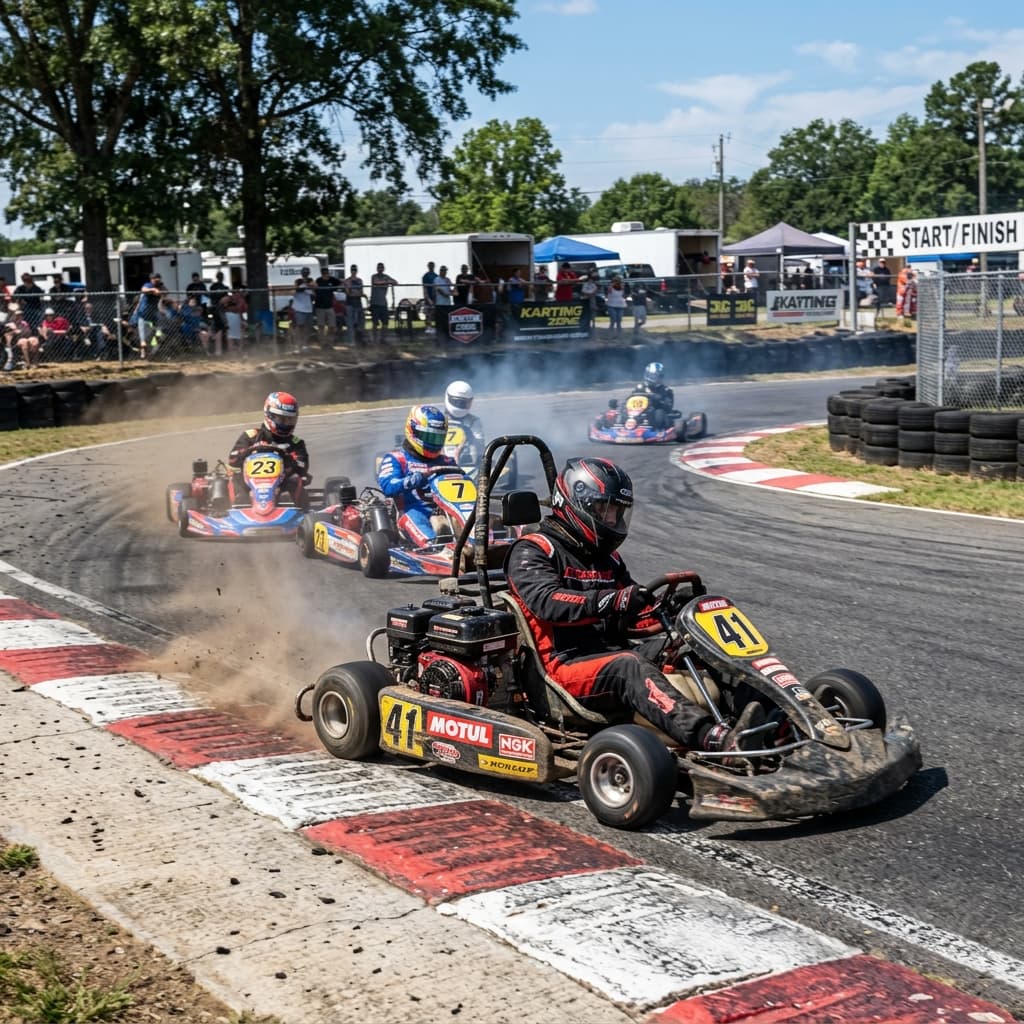
Racing go karts prioritize speed, handling, and precision on paved tracks. These models typically feature 125cc to 250cc two-stroke or four-stroke engines that can reach speeds of 60–100 mph depending on the class. The chassis is built with lightweight materials like chromoly steel to maximize performance.
Track racing karts employ direct drive systems without differentials, requiring drivers to develop advanced techniques for cornering. The seat position is low to the ground — often just inches above the pavement — which lowers the center of gravity for improved stability. Racing models include minimal bodywork to reduce weight and allow for quick mechanical adjustments.
Sprint karts are the most common racing category, designed for short circuit competition. Shifter karts add a manual transmission with up to six gears, delivering professional-level performance. These machines require regular maintenance and tuning to maintain a competitive edge.
- ✓Sprint karts — most accessible racing entry point, direct drive, 125cc two-stroke or four-stroke
- ✓Shifter karts — 6-speed manual gearbox, 125cc two-stroke, up to 100 mph on professional tracks
- ✓Chromoly steel chassis — lightweight, high-strength material standard on competition-grade machines
- ✓Minimal bodywork — weight reduction prioritized over comfort in all racing configurations
Off-Road Gas Go Karts
Off-road gasoline go karts feature reinforced frames, knobby tires, and extended suspension travel for rough terrain. Engine sizes range from 200cc to 400cc, providing the torque needed for climbing hills and navigating obstacles. Ground clearance sits significantly higher than racing models — typically 6–10 inches.
These karts include protective features like roll cages, side panels, and splash guards to shield drivers from debris and impacts. Four-wheel independent suspension systems absorb shocks from uneven surfaces, rocks, and jumps. The wider wheelbase enhances stability on loose dirt, mud, and gravel.
Many off-road models incorporate automatic CVT transmissions, eliminating the need for manual shifting during challenging terrain navigation. Larger fuel tanks accommodate extended trail riding sessions.
- ✓6–10 inches of ground clearance — essential for rocks, roots, and uneven terrain
- ✓CVT automatic transmission — preferred for off-road use where both hands are needed for control
- ✓Knobby tires + independent suspension — absorb impacts that would bottom out a standard racing kart
- ✓Roll cage standard — critical protection on terrain where tip-overs are a genuine possibility
Youth vs. Adult Designs
Youth gasoline go karts utilize 50cc to 110cc engines with governor systems that limit top speeds to 15–30 mph. These models include adjustable throttle limiters that parents can modify as young drivers gain experience. Frame dimensions are scaled down to fit riders ages 5–15, with seats positioned for proper reach to pedals and steering.
Adult go karts feature 200cc to 400cc engines capable of 30–60 mph in recreational models. The frame accommodates riders up to 6'2" and supports weight capacities of 300–400 pounds. Seat designs often include lumbar support and adjustable positioning.
Safety features differ significantly between categories. Youth models typically include tether kill switches, improved bumpers, and speed restrictions. Adult karts assume greater operator skill and responsibility.
2. Key Performance Features
Gas-powered go-karts deliver performance through three critical specifications: engine displacement measured in cubic centimetres, transmission type affecting power delivery, and maximum velocity potential. These factors directly impact acceleration, handling characteristics, and suitability for different rider skill levels.
Engine Sizes and Horsepower by Tier
Gas go-karts typically feature engines ranging from 50cc to 270cc for recreational models, while racing variants may exceed 400cc. The relationship between displacement and performance is direct — larger displacement means more air-fuel mixture per combustion cycle, resulting in higher torque and power output.
| Tier | Engine Size | Horsepower | Top Speed | Best For |
|---|---|---|---|---|
| Entry / Youth | 50cc–125cc | 3–8 HP | 15–35 mph | Beginners, ages 5–15 |
| Mid-Range | 150cc–200cc | 8–15 HP | 35–50 mph | Intermediate adults, casual racing |
| Performance | 200cc–270cc | 15–30 HP | 50–70 mph | Experienced adult riders |
| Racing / Pro | 125cc two-stroke | Up to 40 HP | 80–100 mph | Competition karting |
| Off-Road | 200cc–400cc | 10–20 HP | 30–50 mph | Trail riding, rough terrain |
Transmission Options
Most gas go-karts feature either automatic centrifugal clutches or manual transmissions. Centrifugal clutch systems engage automatically at specific RPM thresholds, eliminating the need for manual gear changes and simplifying operation for recreational drivers.
Direct-drive configurations connect the engine directly to the rear axle through a chain system. This setup maximizes power transfer efficiency and reduces mechanical complexity — the standard choice on recreational and entry-level racing karts.
Manual transmissions appear primarily in racing applications, offering 4–6 forward gears. These systems allow drivers to optimize engine performance across varying track conditions and maintain ideal power bands during competition.
- ✓Centrifugal automatic clutch — best for beginners; engages at RPM, no manual input needed
- ✓Direct chain drive — simplest and most efficient; standard on most recreational karts
- ✓4–6 speed manual (shifter karts) — maximum performance, requires significant skill to operate fast
Top Speed by Engine Class
Speed capabilities depend on factors including rider weight, track conditions, gearing ratios, and aerodynamic design. The figures below represent realistic on-track speeds for each engine class under normal conditions.
| Engine Class | Typical Top Speed | Note |
|---|---|---|
| 50cc–125cc | 15–35 mph | Entry and youth models, governed |
| 150cc–200cc | 35–50 mph | Standard adult recreational range |
| 200cc–270cc | 50–70 mph | Performance adult; requires experience |
| 125cc two-stroke (racing) | 80–100 mph | Professional circuit only |
| 200cc–400cc off-road | 30–50 mph | Terrain limits effective speed |
3. Two-Stroke vs. Four-Stroke Engines
Gas-powered go-karts utilize either two-stroke or four-stroke engines, with each type offering distinct advantages in power delivery and maintenance needs. The choice between them fundamentally shapes the ownership experience — from how you fuel the machine to how often you service it.
Key Differences and Which to Choose
Two-stroke engines complete a power cycle in one crankshaft revolution, delivering power on every downstroke. These engines are lighter and produce more power per displacement, making them popular in racing applications. They require oil mixed directly with gasoline, typically at ratios between 32:1 and 50:1.
Four-stroke engines complete their power cycle in two crankshaft revolutions, firing once every other stroke. These units operate with separate oil and fuel systems, eliminating the need for pre-mixing. They run quieter and produce smoother power delivery compared to two-stroke alternatives.
- ✓Power-to-weight ratio — Two-stroke delivers 20–30% more power per pound
- ✓Torque characteristics — Four-stroke provides broader, more usable torque curves
- ✓Emissions — Four-stroke produces significantly fewer hydrocarbons and runs quieter
- ✓Lifespan — Four-stroke typically lasts 2–3× longer between rebuilds
- ✓Fuel mixing — Two-stroke requires pre-mixed oil/gas (32:1–50:1); four-stroke has separate systems
- ✓Verdict — Recreational buyers: choose four-stroke. Competitive racers: two-stroke
Fuel Consumption and Efficiency
Four-stroke engines consume 25–40% less fuel than comparable two-stroke models during typical operation. Throttle management and track conditions affect efficiency — frequent acceleration and braking increase consumption by 15–25% compared to steady-state operation.
| Engine Type | Fuel per Hour | MPG Range | Oil Requirement |
|---|---|---|---|
| Four-stroke 200cc | 1.0–1.5 gal/hr | 30–50 mpg | Separate oil system — change every 20–25 hrs |
| Two-stroke 125cc | 1.5–2.0 gal/hr | 20–35 mpg | Pre-mixed with gas at 32:1–50:1 |
| Four-stroke 270cc | 1.5–2.0 gal/hr | 25–40 mpg | Separate oil system — higher capacity |
Engine Maintenance Schedule
Two-stroke engines require spark plug inspections every 10–15 hours and replacement every 25–30 hours. Exhaust port carbon buildup should be checked monthly and cleaned as needed. Piston ring replacement typically occurs every 50–75 hours of operation.
Four-stroke engines need oil changes every 20–25 hours or monthly. Valve clearance checks should happen every 50 hours, with adjustments made when specifications fall outside 0.004–0.006 inches. Air filter cleaning is necessary every 5–10 hours in dusty conditions.
- ✓Spark plugs — inspect every 10–15 hrs (2-stroke), replace every 50–100 hrs (4-stroke)
- ✓Air filter — clean or replace every 5–10 hours; more frequently in dusty conditions
- ✓Chain lubrication — every 5 operating hours; check tension before every ride
- ✓Oil changes (4-stroke) — every 20–25 hours or start of each season
- ✓Carburetor cleaning — seasonally and before any storage period over 30 days
4. Gas vs. Electric Go Karts: Full Comparison
Gas and electric go karts differ significantly in their power delivery characteristics, operational duration, and environmental footprint. Understanding these differences helps buyers match the right powertrain to their riding environment and goals.
Power, Torque, and Runtime Side by Side
Gas-powered go karts typically produce 5–20 horsepower with power delivery that increases progressively through the RPM range, peaking between 6,000–10,000 RPM. This characteristic rewards experienced drivers who know how to work the power band.
Electric go karts deliver instant torque from a standstill, providing immediate acceleration without building engine speed. The power delivery remains consistent throughout the speed range — which makes them more intuitive for beginners but less rewarding for skilled drivers seeking to extract maximum performance.
Gas karts maintain consistent power output during extended sessions, as performance does not degrade until fuel runs low. Electric karts may experience power reduction as battery charge depletes, particularly in the final 20–30% of battery capacity.
| Factor | Gas Go Kart | Electric Go Kart |
|---|---|---|
| Power delivery | Progressive — builds through RPM range | Instant — full torque from standstill |
| Top speed potential | 30–100 mph depending on engine class | 15–40 mph (recreational to performance) |
| Runtime per session | 30–60 min (tank size dependent) | 15–30 min (charge dependent) |
| Refuel / recharge time | 2–3 minutes | 4–8 hours (1–2 hrs fast charge) |
| Operating cost per hour | $3–$5 in fuel | $1–$2 in electricity |
5. Safety Standards and Essential Equipment
Gas-powered go-karts require specific safety equipment and design features to protect drivers during operation. At speeds of 30–70 mph, the consequences of a collision or rollover without proper equipment are severe. Understanding mandatory protective gear and built-in safety mechanisms is non-negotiable before your first session.
Protective Gear Essentials
A full-face helmet rated DOT, Snell, or ECE is the most critical piece of safety equipment for gas go-kart operation. The helmet must fit snugly without pressure points and feature a secure chin strap. For karts capable of 50+ mph, a Snell SA-rated racing helmet is recommended over a standard motorcycle helmet.
Drivers should wear abrasion-resistant racing suits or, at minimum, long-sleeved shirts and jeans. Closed-toe shoes with firm soles provide better pedal control than sneakers or casual footwear.
- ✓Full-face helmet — DOT/Snell/ECE certified; Snell SA-rated for 50+ mph karts
- ✓Neck brace or collar — prevents hyperextension in frontal impacts
- ✓Racing gloves — improve grip, protect hands from friction burns
- ✓Rib protector or chest guard — essential for off-road and high-speed track use
- ✓Closed-toe shoes — firm sole for pedal feel; no sandals or open footwear
- ✓Knee and elbow pads — additional protection for off-road models
Kart Design Safety Features to Verify
Modern gas go-karts incorporate roll bars or roll cages that protect drivers during flips or side impacts. The frame should be constructed from reinforced steel tubing with proper welds and no visible cracks. Seat belts or racing harnesses keep drivers secured during high-speed turns and sudden stops — four-point or five-point harnesses distribute forces across the body more effectively than standard lap belts.
The kart should have functional disc brakes on both rear wheels for balanced stopping power. Brake lines must be properly routed away from hot engine components and secured to prevent snagging.
- ✓Roll cage or roll bar — verify it extends above the driver's head height
- ✓Four or five-point harness — lap belt alone is insufficient at 40+ mph
- ✓Disc brakes on rear wheels — hydraulic preferred over mechanical for fade resistance
- ✓Throttle kill switch within driver reach — reachable without removing hands from wheel
- ✓Chain guard covering full drive chain — exposed chains cause severe injury
- ✓Side bumpers or nerf bars — protect legs during side contacts on track
Recommended Safety Upgrades
Upgraded hydraulic disc brakes provide more consistent stopping power than mechanical systems, particularly during extended racing sessions. This modification improves response time and reduces brake fade under heavy use — one of the most worthwhile upgrades on any mid-range kart that ships with mechanical brakes.
Installing a racing seat with proper bolstering keeps drivers positioned correctly during aggressive cornering. The seat should include mounting points for harnesses and adequate padding for comfort during longer rides.
A fire extinguisher mounting bracket allows quick access to suppression equipment in case of fuel fires. A 2.5-pound ABC-rated extinguisher handles most kart-related fire emergencies and should be considered mandatory on any kart used for serious track sessions.
6. Choosing the Right Gas Go Kart for Adults
Adult riders need gas-powered go karts that accommodate larger frames, deliver sufficient power, and match their specific riding goals. The right selection depends on physical specifications, planned activities, and desired performance level.
Weight Capacity and Frame Sizing
Most gas go karts designed for adults support between 250 to 400 pounds. Entry-level models typically handle up to 275 pounds, while heavy-duty frames accommodate 350 pounds or more.
Frame dimensions matter as much as weight limits. Standard adult models feature seat widths of 16–20 inches and leg room extending 30–36 inches from the pedals. Taller riders above 6 feet should verify the adjustable seat range before purchase — some entry-level models have limited adjustment travel.
Engine displacement directly relates to performance under load. A 200cc engine provides adequate power for riders up to 200 pounds on flat terrain. Heavier adults or those tackling hills benefit from 270cc to 420cc engines that maintain speed regardless of rider weight.
- ✓Under 200 lbs on flat terrain — 200cc engine is adequate
- ✓200–275 lbs or hilly terrain — step up to 270cc minimum
- ✓275 lbs+ — look for frames rated 350+ lbs; 300cc–400cc engine
- ✓Riders above 6'0" — verify adjustable seat travel reaches full extension before buying
Matching the Kart to Your Intended Use
Track racing requires models with low center of gravity, racing slicks, and engines producing 15–20 horsepower. These karts prioritize speed and handling over comfort, with firm suspension and minimal ground clearance. Purpose-built sprint karts from brands like Tony Kart, CRG, and Birel ART are the correct choice here.
Off-road and trail riding demands knobby tires, reinforced frames, and 8–10 inches of ground clearance. All-terrain models include protective skid plates and shock-absorbing suspension systems. Engine torque matters more than top speed — CVT transmission off-road models from Hammerhead and TrailMaster are the practical choice.
Recreational backyard use benefits from versatile models with adjustable suspension and dual-purpose tires. Coleman Powersports and TrailMaster mid-range models (196cc–270cc) balance performance, durability, and price effectively for this use case.
Customization and Performance Upgrades
Performance upgrades including carburetor kits, exhaust systems, and clutch modifications can increase horsepower by 20–30%. Riders should verify warranty terms before installing aftermarket parts — most manufacturer warranties are voided by engine modifications.
Safety additions such as roll cages, racing harnesses, and hydraulic disc brakes enhance protection during aggressive driving. LED light kits enable evening operation on private property.
Comfort modifications like padded racing seats, adjustable steering columns, and extended foot pegs improve the driving experience during longer sessions. Storage racks and protective fenders add practical functionality for utility purposes.
- ✓Carburetor + exhaust kit — 20–30% HP gain; verify warranty impact before installing
- ✓Hydraulic disc brake conversion — highest safety ROI on karts shipping with mechanical brakes
- ✓Racing harness upgrade — 4-point minimum, 5-point for serious track use
- ✓LED light kit — enables evening and low-light operation on private property
7. Popular Brands and What They Offer
Several established companies dominate the gas-powered go-kart market, each offering distinct features and quality levels. These manufacturers range from budget-friendly recreational options to premium racing-grade machines used in professional competition.
| Brand | Primary Focus | Engine Range | Price Range | Best For |
|---|---|---|---|---|
| TrailMaster | Entry to mid-range recreational | 150cc–300cc | $1,000–$3,500 | Backyard and casual track use |
| Coleman Powersports | Adult recreational | 196cc–270cc | $900–$2,500 | Value-focused adult buyers |
| Hammerhead Off-Road | Off-road performance | 208cc–300cc | $2,000–$5,000 | Trail and rough terrain |
| Razor | Youth to adult | 170cc–270cc | $800–$2,000 | Safety-first, certified models |
| Tony Kart | Competitive racing | 125cc two-stroke | $4,000–$10,000+ | Sprint and shifter racing |
8. Where to Buy and What to Inspect
Gas-powered go-karts are available through multiple retail channels, each offering distinct advantages in pricing, selection, and buyer protection. Understanding the differences between new and used markets, along with key purchasing criteria, helps buyers make informed decisions.
New vs. Used Market
New gas go-karts are available from specialty retailers, motorsports dealerships, and online marketplaces. These sources typically offer the latest models with full manufacturer warranties and prices ranging from $800 for entry-level karts to $5,000+ for high-performance models.
Used gas go-karts can be found on platforms such as Craigslist, Facebook Marketplace, eBay, and local classified ads. Buyers can save 30–50% compared to new models, though they sacrifice warranty coverage and may inherit unknown maintenance issues. Inspecting used karts in person is essential — check frame integrity, engine condition, and brake functionality before any money changes hands.
Local karting clubs and racing facilities sometimes sell well-maintained karts from their rental fleets, offering a middle ground between private sellers and new purchases.
- ✓New from dealer — full warranty, latest spec, 15–30% higher price than grey-market equivalent
- ✓Used private sale — 30–50% savings; inspect in person before committing
- ✓Racing club fleet sales — often the best value; maintained to a known standard by regular staff
- ✓Always run the engine cold and warm — listen for knocking, rattles, or irregular idle
What to Inspect Before You Buy
Before purchasing any used kart, work through this inspection sequence:
Frame: Look for cracks, rust, or visible welding repairs that may indicate previous crash damage. Hairline cracks around steering column mounts or rear axle brackets are red flags.
Engine: Run from cold — listen for knocking or irregular idle. Check for oil leaks around the gasket, excessive smoke from the exhaust, and whether the throttle returns fully to idle on release.
Brakes: Test stopping power from low speed; brake fade or pulling indicates worn pads or uneven disc wear.
Chain and drivetrain: The chain should have ¼–½ inch of slack. Inspect sprocket teeth for hooking or unusual wear patterns.
Tires: Check tread depth and sidewall condition; cracking indicates age even if tread depth appears adequate.
- ✓Frame cracks around weld points — walk away; structural repair is rarely safe or economical
- ✓Cold start test — knocking on cold start often indicates worn bearings or low compression
- ✓Full throttle return — sticky throttle is a serious safety issue; test before every ride
- ✓Chain tension ¼–½ inch — too tight causes bearing wear; too loose risks jumping the sprocket
9. Full Cost of Ownership Breakdown
Gas-powered go-karts require significant initial investment, with prices varying based on engine size and build quality. Fuel consumption and regular maintenance create ongoing expenses that owners must budget for throughout the vehicle's lifespan.
| Cost Category | Entry Level | Mid Range | Performance / Racing |
|---|---|---|---|
| Kart purchase price | $800–$1,500 | $1,500–$3,500 | $4,000–$10,000+ |
| Safety gear | $200–$400 | $400–$800 | $800–$2,000+ |
| Trailer / transport | $300–$600 | $600–$1,500 | $1,500–$3,000+ |
| Fuel per hour | $3–$4 | $4–$5 | $5–$7 |
| Annual maintenance | $150–$250 | $250–$500 | $500–$1,500+ |
Routine Maintenance Cost Breakdown
Fuel costs depend on usage frequency and engine efficiency. Most gas go-karts consume 1–2 gallons per hour of operation at approximately $3–$5 per gallon. The practical cost per session (45–60 min) runs $5–$10 in fuel for recreational karts.
- ✓Oil changes every 10–20 hours — $15–$30 per change
- ✓Air filter clean/replace — $10–$25 per service
- ✓Spark plug replacement — $5–$15
- ✓Chain lubrication and adjustment — $10–$20 per service
- ✓Tire replacement (every 1–2 seasons) — $100–$300 per set
- ✓Engine rebuild every 50–100 hours of hard use — $300–$800 total
10. Maintenance and Troubleshooting
Regular maintenance extends the lifespan of gas-powered go karts and prevents costly repairs. The three areas that cause the most owner frustration — hard starting, power loss, and engine surging — are almost always resolved by addressing these fundamentals in order.
Routine Engine Care
Engine oil should be changed every 20–25 hours of operation or at the start of each season. Most gas go karts use 10W-30 or 10W-40 oil, with typical capacities ranging from 0.6 to 1.2 quarts depending on engine size.
The air filter requires inspection after every 5–10 hours of use in dusty conditions. Foam filters need cleaning with soap and water, then re-oiling. Paper filters should be replaced when they appear dirty or clogged.
Spark plugs need replacement every 50–100 hours or annually. A gap of 0.028–0.030 inches works for most engines. Dark, oily plugs indicate a rich fuel mixture; white deposits suggest lean conditions. The fuel system benefits from fresh gasoline and periodic carburetor cleaning — ethanol-free fuel prevents gumming and extends component life significantly.
Common Performance Issues and Fixes
Hard starting typically results from a fouled spark plug, stale fuel, or incorrect choke operation. Check these items first — they account for over 80% of starting complaints.
Loss of power often stems from a clogged air filter, worn drive belt, or dirty carburetor. The carburetor may need adjustment if the engine runs too rich or lean.
Engine surging indicates fuel delivery problems or air leaks in the intake system. Inspecting fuel lines, gaskets, and carburetor mounting resolves most cases.
Chain or belt tension affects acceleration and top speed directly. Chains need ¼ to ½ inch of slack; belts should deflect about ½ inch under moderate pressure.
- ✓Hard starting → check spark plug, then fuel freshness, then choke — in that order
- ✓Power loss → air filter first, then carburetor jet size, then drive chain tension
- ✓Engine surging → inspect all fuel line connections and intake manifold gaskets for air leaks
- ✓Excessive chain noise → adjust tension; lubricate; inspect sprocket teeth for wear
End-of-Season Storage Best Practices
The fuel tank should be either completely drained or filled with treated fuel before long-term storage. Fuel stabilizer prevents varnish buildup in the carburetor and fuel lines — the single most common cause of a kart that ran fine last season refusing to start this one.
The battery requires disconnection and periodic charging every 30 days during storage. A fully charged battery resists freezing and sulfation damage.
Tires maintain proper shape when the kart is elevated or moved monthly. Flat spots develop when weight rests on one position for extended periods. Storage locations should be dry, covered, and protected from temperature extremes above 100°F or below 20°F.
- ✓Fuel stabilizer — add to tank before any storage period over 30 days
- ✓Battery — disconnect and charge monthly; do not leave connected and dormant
- ✓Elevate kart or rotate tires monthly — prevents flat-spot deformation in storage
- ✓Fresh spark plug and oil change before returning to service after winter storage
Frequently Asked Questions
What is the best engine size and horsepower for an adult recreational kart?+
What safety features should I look for when buying a kart for an adult rider?+
What is a realistic budget for a reliable adult gas go kart, and what do you get at each price point?+
How do I choose the right kart size and weight capacity as an adult rider?+
Where are the most reputable places to buy a new or used gas go kart?+
What routine maintenance is required, and what repairs should owners expect?+
Gas-powered go karts remain the definitive choice for riders who want authentic racing performance, longer session times, and the mechanical engagement of a combustion engine. For recreational use, the Coleman 196cc and TrailMaster mid-range models offer excellent value from $900–$2,500. For off-road, Hammerhead delivers the right combination of torque and chassis protection. For competition, Tony Kart, CRG, and Birel ART represent the benchmark. Budget carefully for the full ownership picture — safety gear, maintenance, and fuel add meaningfully to the sticker price over time. Find go-karting venues near you to experience professional gas-powered karts before committing to a purchase.
Find Go Karting Venues Near MeContinue Reading

Torque vs. Top Speed: The Definitive Guide to Electric and Gas Go-Karts
The global go-karting landscape is undergoing a massive shift. Compare the physics, costs, and track experiences of electric vs. gas go-karts.
Read GuideTop Adult Go Karts for 2026: Electric, Off-Road, Indoor & Pedal Karts Compared
Adult go karts are a completely different machine from what most people grew up on — higher weight ratings, real suspension, serious engines, and a purchase decision that can cost anywhere from $900 to $6,000. This guide cuts through the noise with real specs, honest pricing, and the questions most buying guides never answer.
Read GuideRelated Topics