
Last updated: 25 June 2026 · Prices verified from official track websites and booking platforms.
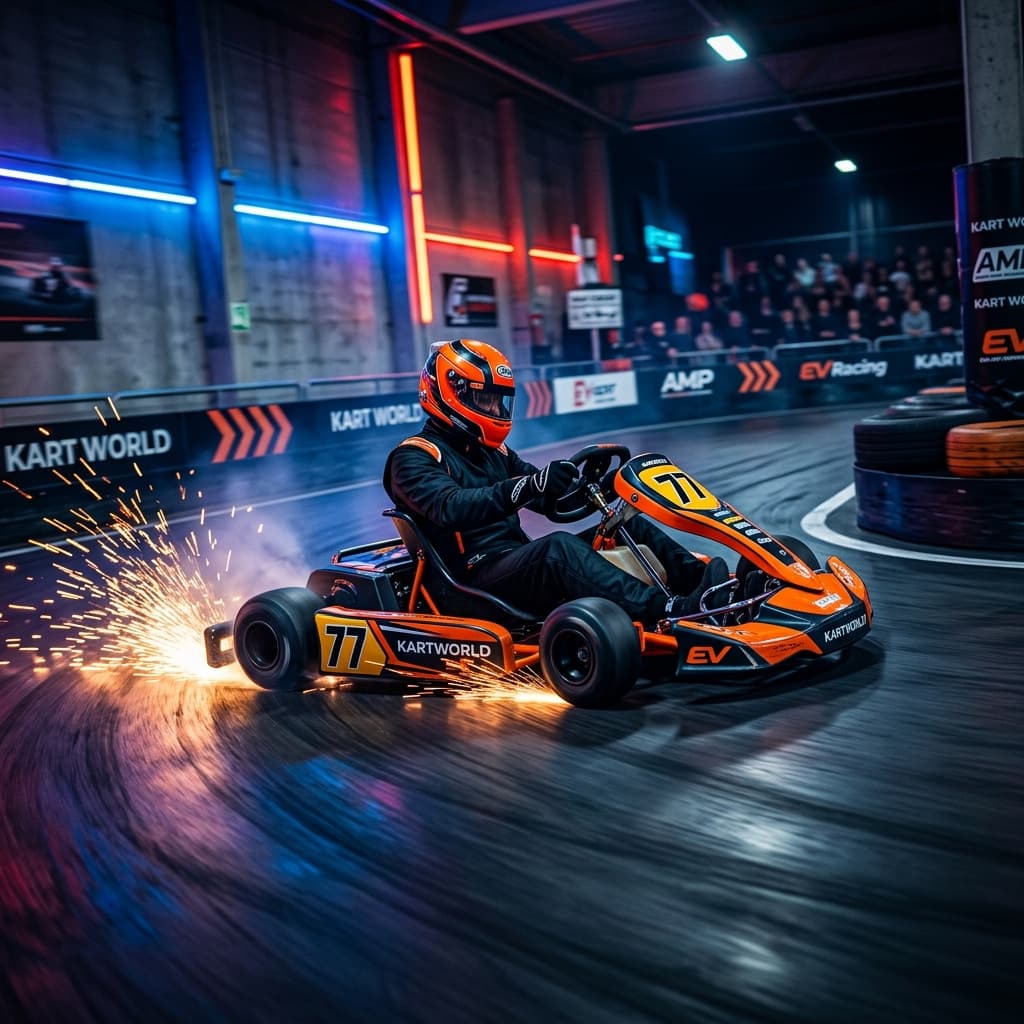
There is a moment in every driver's life when they stop caring about lap times and start caring about angles. That is the moment a drift kart was built for. A drift kart is not simply a go-kart that loses control. It is a machine precision-engineered to break traction intentionally, hold a sideways angle with absolute control, and let the driver choreograph every slide with a flick of the wrist and a squeeze of the throttle. These battery-powered machines feature rear-wheel drive systems, low-grip rear tires, and precision steering that allow drivers to maintain extended drifts with real angle and control. Unlike standard go-karts that prioritise straight-line speed, drift karts are engineered from the ground up for a driving experience that mimics professional drifting in a compact format. The drift kart market has exploded in the last five years. From the cult-favourite Razor Crazy Cart in driveways to high-performance machines from manufacturers like Electro & Company and BattleAero capable of exceeding 40 mph, there is now a drifting cart for every age, budget, and skill level. Whether you are hunting for the best electric drift go kart for your backyard, a mini drift kart for your kids, or a full performance machine for competitive drifting, this guide covers everything you need to know.
1. What Exactly Is a Drift Kart?
A drift kart is a specialized go-kart designed with one primary goal: intentional, controlled rear-wheel slide. Unlike conventional go-karts, which are engineered to maximize grip so the driver can carry maximum cornering speed, a drift kart is deliberately built to break traction at the rear wheels on command.
The result is a completely different driving experience. Instead of fighting to maintain grip through a corner, the driver actively manages a sideways slide — balancing throttle input, counter-steering, and body weight to hold a desired angle while the chassis pivots around its centre of gravity. It transforms a lap around a track into something closer to a dance.
While motorsport drifting on full-sized cars requires a significant mechanical and financial commitment, a recreational drift go kart brings that same skill-building experience to your driveway or a local track at a fraction of the cost and risk.
- ✓Purpose-built for controlled slides: Unlike regular karts focused on grip, drift karts use low-traction rear wheels to encourage oversteer.
- ✓Two distinct design philosophies: Caster-wheel karts (like the Razor Crazy Cart) allow 360-degree multi-directional drifting; rear-drive slick-tire karts simulate traditional car-style drifting.
- ✓Accessible to all ages: From 24V mini drift karts for kids aged 8+ to adult drift carts supporting up to 240 lbs, the market covers every level.
The Science Behind the Sideways Slide
To understand why a drift kart behaves differently from a regular go-kart, you need to understand how traction works at the rear wheels.
Standard go-karts use rubber pneumatic tires that grip the track surface aggressively, converting the engine's power into forward motion. Drift karts replace these grippy rubber tires — at least on the rear — with one of two low-traction alternatives:
POM (Polyoxymethylene) Super Slider Wheels: Used on karts like the Razor Ground Force Drifter, these hard plastic rear wheels dramatically reduce the friction between the wheel and the ground. Because the rear cannot generate enough lateral grip to resist the turning force, the kart's rear end breaks loose and slides outward. The driver then counter-steers to catch and maintain the slide.
Caster / Swivel Wheels: Used on the Razor Crazy Cart family, the rear of the kart runs on free-swivelling caster wheels — the same type found on office chairs. Because the rear wheels can pivot freely in any direction, the kart is capable of fully multi-directional drifting: 360-degree spins, sideways slides, and fishtails, all under complete driver control via a drift bar and foot pedal.
Both systems rely on the same underlying physics: the rear-weight bias of the chassis (which concentrates mass toward the driven wheels) and the instant torque of the electric motor (which allows the driver to break and modulate traction with a precise press of the foot pedal).
2. Electric vs. Gas Drift Karts
When it comes to recreational drift karts, you have two power choices, and they deliver very different experiences. The decision largely comes down to where you plan to drift, how experienced you are, and how much upkeep you are willing to do.
Electric Drift Karts: Built for Control
The electric drift kart has become the dominant platform for recreational drifting — and the physics explain exactly why. Electric motors deliver 100% of their available torque the instant you press the pedal. There is no throttle lag, no carburetor to tune, and no RPM band to stay in. This means a beginner can modulate their slide in real time: ease off slightly to tighten the angle, press a little harder to widen it.
This precise, programmable throttle response is the single biggest reason electric drift karts are better for learning drifting fundamentals than gas equivalents. The feedback loop between throttle input and slide angle is immediate and consistent — exactly what you need when developing muscle memory.
Electric drift carts also run nearly silently and produce zero exhaust emissions. This makes them the only viable option for indoor arenas, residential driveways, and noise-sensitive environments. An electric drift go kart that you can legally run in your driveway at 8pm is infinitely more practical for most people than a gas-powered alternative.
Key practical considerations for electric drift karts: - Run times are typically 30–45 minutes per charge on recreational models. - The 24V go kart voltage tier handles children and lighter teens; 36V handles adult riders up to 240 lbs. - No oil, no air filter, no spark plug. The maintenance routine is: charge the battery, check the chain tension, inflate tires.
- ✓Instant, precise torque — the #1 reason electric is better for learning to drift.
- ✓Zero emissions and near-silent operation — the only viable option for indoor and residential use.
- ✓Almost no routine maintenance beyond charging and occasional chain lubrication.
Gas Powered Drift Karts: For the Mechanical Purist
Gas powered drift go karts occupy a different niche entirely. They are built for outdoor tracks and backyard circuits where noise and exhaust emissions are not a concern. A 196cc or 212cc engine paired with hard plastic drift sleeves on the rear wheels delivers a raw, visceral experience — the snarl of a combustion engine, the smell of two-stroke exhaust, and the mechanical challenge of managing clutch, throttle, and counter-steering simultaneously.
Gas drift karts typically achieve higher top speeds than their electric equivalents, with modified builds hitting 25–40+ mph. This makes them popular with more experienced drifters who have already developed their technique and want to push the limits on a proper outdoor circuit.
The trade-offs are real, however. A gas drift kart requires regular carburetor tuning (which changes with altitude, temperature, and humidity), oil changes, air filter maintenance, and chain inspection. Tire wear on hard plastic drift sleeves is aggressive, and the parts need replacing more often than on electric models. They also cannot be run in a garage, indoor arena, or in most residential neighbourhoods without violating noise ordinances.
For most recreational buyers — especially those buying their first drifting cart — electric is the smarter starting point.
True Long-Term Cost: Electric vs. Gas Side by Side
Beyond the upfront purchase price, the ongoing operating costs tell a very different story between the two power types. Electric drift karts eliminate oil changes, spark plug replacements, air filter servicing, and carburetor adjustments. The primary maintenance costs are tire or drift sleeve replacement, occasional bearing lubrication, and battery replacement every 3–5 years.
| Cost Factor | Electric | Gas |
|---|---|---|
| Energy / Fuel per hour | $0.50–$1.50 | $3–$6 |
| Annual maintenance | $50–$100 | $200–$400 |
| Battery / Engine replacement | $400–$800 (every 3–5 yrs) | $300–$600 (every 2–3 yrs) |
| Indoor / residential use | ✓ Yes — zero fumes | ✗ No — fumes + noise |
| Noise level | 60–70 dB (conversation level) | 90–100 dB (hearing protection needed) |
3. The Best Drift Kart Models in 2025
The drift kart market spans four distinct tiers — from budget 24V entry drifters for young children, through adult recreational karts, to serious performance machines capable of exceeding 40 mph. Here is the complete market breakdown by tier and capability.
| Model | Voltage / Motor | Top Speed | Max Rider | Best For | Price Range |
|---|---|---|---|---|---|
| Razor Ground Force Drifter | 24V | 12 mph | 140 lbs / Kids 8+ | First drifter, POM slider wheels | $200–$260 |
| Razor Crazy Cart | 24V | 12 mph | 120 lbs / Kids 9+ | Multi-directional caster-wheel drifting | $280–$350 |
| Radio Flyer Extreme Drift Go Kart | 36V | 11 mph | 130 lbs / Ages 13+ | Teen slick-tire RWD drifting | $350–$450 |
| Hyper Drift Go Kart | 24V | ~10 mph | ~130 lbs / Teens | Budget entry, compact footprint | $200–$300 |
| Razor Crazy Cart XL | 36V / 500W | 17 mph | 240 lbs / Ages 16+ | Best turnkey adult electric drift kart | $1,100–$1,300 |
Best Drift Karts for Kids and Teens
The three dominant options for younger riders each take a different mechanical approach to drifting:
Razor Ground Force Drifter (24V): The original gateway drug to sideways driving. The Ground Force Drifter uses patented POM Super Slider rear wheels — a hard polyoxymethylene plastic that reduces rear traction dramatically. Turn the wheel sharply while accelerating, and the rear simply lets go, initiating a smooth power slide. With a top speed of 12 mph and a steel frame built for abuse, this is the ideal first drifter for ages 8 and up. Maximum rider weight is 140 lbs.
Razor Crazy Cart (24V): The Crazy Cart uses a completely different drifting mechanism. The rear of the kart rides on free-swivelling caster wheels, and a drift bar in the driver's hands controls the angle of those rear wheels. Tilt the drift bar, and the rear can slide in any direction — resulting in 360-degree spins, diagonals, and fully sideways slides that are impossible on a conventional RWD kart. For ages 9 and up, max weight 120 lbs.
Radio Flyer Extreme Drift Go Kart (36V): This is the most capable kid-oriented drifter on the market. Its 36V battery powers three forward speeds up to 11 mph, while high-grip front tires and slick rear wheels create the same effect as slick-tire rear-wheel drive drifting. Crucially, it supports riders up to 130 lbs and is recommended for ages 13+ in its top speed setting, giving older teens a genuine drifting chassis. The Radio Flyer Extreme Drift go kart is one of the few drifting carts that bridges the gap between child and teen riding.
Best Drift Karts for Adults: Three Performance Tiers
The adult electric drift kart market now spans three genuinely distinct performance tiers. Choosing between them depends on your experience level, your target speed, and how seriously you want to pursue the skill.
Tier 1 — Razor Crazy Cart XL (36V / 500W, $1,100–$1,300): Still the best turnkey entry point for adults. Supports riders up to 240 lbs, reaches 17 mph, and delivers up to 40 minutes of runtime per charge. Its three-input control system — steering wheel, foot pedal, and hand-operated drift bar — gives experienced riders the tools to execute precision slides, linked drifts, and 360-degree spins. For a beginner, it is "easy to start, difficult to master" — exactly the right learning curve.
Tier 2 — BattleAero & DriftKart D1 ($1,500–$2,500): For riders who have outgrown caster-wheel dynamics and want authentic rear-wheel-drive drift mechanics. BattleAero runs a 72V / 3kW motor delivering 30+ mph and enhanced steering systems for precision angle control. DriftKart D1 is purpose-built as a training machine: 900-degree steering lock-to-lock, a programmable e-brake mode that simulates handbrake function without locking the tires, and a chassis tuned specifically for skill transfer to real-car drifting.
Tier 3 — Electro & Company E-Drift Kart ($2,500–$4,000+): The pinnacle of commercially available electric drift machines. The E-Drift Kart runs 72V systems with motor configurations from 2,000W for intermediate drivers up to 10kW for competitive use. Aluminum frame construction, 40+ mph top speed, and adjustable seating make this the machine for serious performance buyers.
- ✓Razor Crazy Cart XL — 36V / 500W, 17 mph, 240 lbs max, ages 16+. Best turnkey adult entry. $1,100–$1,300.
- ✓BattleAero Drift Kart — 72V / 3kW, 30+ mph. Authentic RWD drift dynamics, enhanced steering. $1,500–$2,500.
- ✓DriftKart D1 — 48V, 900° steering, programmable e-brake. Best for skill development. $1,800–$2,200.
- ✓Electro & Company E-Drift Kart — 72V / up to 10kW, 40+ mph, aluminum frame. Competition-grade. $2,500–$4,000+.
Mini Drift Karts: Maximum Fun in a Compact Package
Mini drift karts are the entry point into the drifting world — compact, lightweight, low-speed drifters that are perfect for younger riders taking their first sideways steps. Models like the Hyper Drift Go Kart (24V) and the Drifter 2.0 24V electric go kart offer a slightly smaller footprint than full-size drift karts, making them easier to store, manoeuvre, and control at lower speeds.
The trade-off is straightforward: mini drift karts sacrifice some top-end speed and weight capacity for a more manageable, confidence-building experience. For a child making the leap from a regular ride-on to something that actually slides, a mini drift kart is the perfect intermediate step before upgrading to a full-sized drifter. They also tend to be more competitively priced, often sitting in the $150–$250 range on major retailers.
4. How to Drift a Go Kart: Three Core Beginner Techniques
Learning to drift is not about losing control — it is about developing the throttle sensitivity and counter-steering reflexes to maintain control while the rear wheels are sliding. The three most practical techniques for a recreational drift kart are:
- ✓Throttle Oversteer (Power Drift): Approach a corner at moderate speed, apply a sharp steering input, then simultaneously increase throttle. The extra power breaks rear traction and initiates the slide. Modulate the throttle to widen or tighten the angle. Ease off to exit. This is the most intuitive technique on electric drift karts.
- ✓Counter-Steering: Once the rear breaks loose, the front of the kart points into the corner while the rear slides outward. Counter-steering means turning the steering wheel in the opposite direction of the corner — "catching" the drift. The earlier and smoother your counter-steer, the longer and cleaner the slide. Over-correcting will cause a spin; under-correcting will wash out wide.
- ✓Lift-Off Oversteer: Approach a high-speed corner carrying more speed than the kart can grip through. Abruptly releasing the throttle shifts weight forward onto the front wheels, unloading the rear. The rear loses traction and the kart rotates. This technique is more advanced and works better on gas drift karts at higher speeds.
5. Safety Tips and Essential Protective Gear
Proper safety equipment, appropriate riding locations, and a pre-ride inspection routine are the three foundations of safe drift kart operation. At the speeds these machines reach — even entry-level 12 mph models — an impact without proper gear can cause serious injury.
Protective Gear: What You Actually Need
A properly fitted helmet is the most critical piece of safety equipment. It must meet DOT, CPSC, or ASTM safety certifications and fit snugly without sliding during movement. For performance karts capable of 30+ mph (BattleAero tier and above), a full-face helmet is required — not optional.
Beyond the helmet, the minimum kit is: knee and elbow pads for protection during falls, closed-toe shoes with grip to prevent foot injuries and ensure proper pedal control, and gloves for steering grip and hand abrasion protection. Long pants and long sleeves provide an extra skin layer — at the competitive level, Nomex racing suits, neck braces, and rib protectors are standard.
Parents should verify that all protective equipment fits correctly before allowing younger riders to operate a drift kart. A helmet that rotates on impact provides significantly reduced protection.
- ✓Full-face helmet — DOT/ASTM certified; mandatory for 30+ mph models
- ✓Knee and elbow pads — especially important during the learning phase when technique errors are frequent
- ✓Closed-toe shoes — sandals or open footwear create serious foot injury risk near rotating wheels
- ✓Gloves — improve steering grip and protect hands from abrasion on a slide-off
Safe Riding Environments and Pre-Ride Checklist
Open, paved areas away from traffic provide the ideal setting. Parking lots, tennis courts, and dedicated karting facilities offer smooth surfaces with adequate space for maneuvering. Maintain a minimum clear zone of 10–15 feet around the riding perimeter to allow for unexpected angle changes without hitting fixed objects.
Avoid areas with pedestrians, obstacles, or irregular surfaces. Wet or oily pavement dramatically increases the risk of uncontrolled sliding and should be treated as a no-go condition until skill level is high enough to manage it intentionally.
- ✓Battery charge — verify before every session; low battery affects braking capability and motor performance
- ✓Tire pressure and drift sleeve condition — worn surfaces change slide behavior unpredictably
- ✓Brake function — test in a stationary position; any sponginess requires immediate attention before moving
- ✓Steering mechanism — check for looseness or binding that could cause unexpected behavior at speed
- ✓All bolts and fasteners — especially rear axle, seat mounts, and steering column hardware
- ✓Battery connections — secure, dry, and free of corrosion
6. Customization and Performance Upgrades
Electric drift karts offer extensive modification potential through performance enhancements, visual customization, and specialized accessories. Enthusiasts can transform base models into personalized machines tailored to their specific drifting style and performance requirements.
Performance Modifications That Make a Real Difference
Motor and controller upgrades represent the highest return-on-investment modification. Upgraded controllers can support dramatically higher wattage — some configurations supporting over 25,000W — for enhanced drifting speed and torque. Battery system improvements extend runtime and deliver more consistent power delivery during extended sessions.
Tire selection is underrated and dramatically influences drift initiation and control. Harder compound rear tires facilitate easier slide initiation; softer compounds provide more grip for controlled transitions. Many riders experiment with different tire pressures and widths to find optimal balance for their weight and surface. Suspension upgrades — where the chassis supports them — allow riders to dial in specific ride heights and damping rates for their preferred surface conditions.
- ✓Controller upgrades — highest ROI mod; transforms mid-range karts to near-performance spec
- ✓Tire compound selection — harder rear = easier slide initiation; softer = more controlled transitions
- ✓Battery capacity upgrades — extended session length; high-discharge cells improve peak power
- ✓Suspension mods (where available) — ride height and damping tuning for different surfaces
8. Drift Kart Kits: Build Your Own Drifter
For mechanically inclined riders who want a custom setup, the drift kart kit market offers a compelling route to a fully personalised drifting machine. A drift go kart kit typically includes a bare-metal chassis, a rear axle, seating, and a steering column — you supply the engine or motor, the wheels, and the drivetrain components.
The most popular engine for a DIY gas drift kart build is the Predator 212cc (roughly $100–$150 at Harbor Freight). Paired with hard plastic drift sleeves fitted over standard pneumatic rear wheels, or with dedicated POM wheels, this setup delivers a budget gas drift kart with genuine sideways capability.
For an electric DIY build, a brushless motor kit with a 36V or 48V lithium battery and a go-kart chassis forms the base. Electric builds are cleaner and easier to maintain but require more upfront electrical knowledge.
Separately, the drift trike kit (or drift trike rear axle kit) is a popular entry into the drifting world for riders who prefer a three-wheeled setup. These kits bolt onto a standard downhill trike frame and replace the rear axle assembly with a fixed axle and PVC-sleeved wheels, enabling the same type of sideways rear slides as a full drift kart — but on a hillside rather than a flat circuit.
- ✓Full drift kart kit: Bare chassis + your choice of Predator 212cc engine, POM or drift-sleeve rear wheels. Total build cost typically $400–$800.
- ✓Drift trike rear axle kit: Converts a standard trike to a drifting machine using a fixed rear axle and PVC drift sleeves. Most popular kit option for beginners on a budget.
- ✓Electric conversion: 36V/48V brushless motor + lithium battery + chain drive. Cleaner, quieter, lower maintenance than gas builds.
9. Finding Drift Karting Experiences Near You
While most recreational drift karts are designed for private backyards and driveways, dedicated drift karting experiences at commercial venues are steadily growing. Indoor karting facilities with dedicated drift sessions are increasingly common in Tier-1 markets, offering high-speed professional electric drift karts in a climate-controlled, safety-monitored environment.
For a venue to offer true drifting experiences — rather than standard grip racing — it needs either a dedicated drift circuit with a polished or low-friction surface, or fleet karts equipped with low-traction rear wheels specifically designed for drift events. Many of the best indoor karting experiences now rotate between standard grip races and open drift sessions.
If you are looking for an outdoor go-karting venue that offers gas drift karts or a purpose-built drift track, searching for tracks with loose-surface or dirt circuits is your best bet. These outdoor tracks naturally facilitate a more sideways, momentum-based driving style thanks to the reduced traction of gravel and dirt compared to asphalt.
Frequently Asked Questions
What is the difference between a drift kart and a regular go-kart?+
Are electric drift karts better than gas for beginners?+
What is the best drift kart for adults?+
What is the typical price range for a quality drift kart, and what drives the cost difference?+
What safety gear is recommended for drift kart riders?+
How fast does a drift kart go?+
Are drift karts safe for kids?+
Can I build my own drift kart with a kit?+
What is the Razor Crazy Cart and how does it differ from the Ground Force Drifter?+
Whether you are after a backyard drifting cart for your kids, a serious electric drift kart for adults starting at $1,100 with the Razor Crazy Cart XL, a mid-range performance machine from BattleAero or DriftKart.co, or the 40+ mph competition benchmark from Electro & Company — the drift kart world has a purpose-built machine for you. Gear up properly, start at a lower power mode, and build technique before chasing speed. And when you want to experience professional drift karts in a track environment, find the best karting venues near you — many now run dedicated electric drift sessions.
Find Drift Karting Venues Near MeContinue Reading
Electric Drift Kart: The Ultimate Guide to High-Performance Indoor and Outdoor Racing
Electric drift karts are purpose-built machines with rear-wheel drive, low-grip tires, and instant torque that enable controlled sideways slides from 12 mph all the way to 40+ mph. This complete guide covers how they work, the best models for every budget, and step-by-step drifting techniques.
Read Guide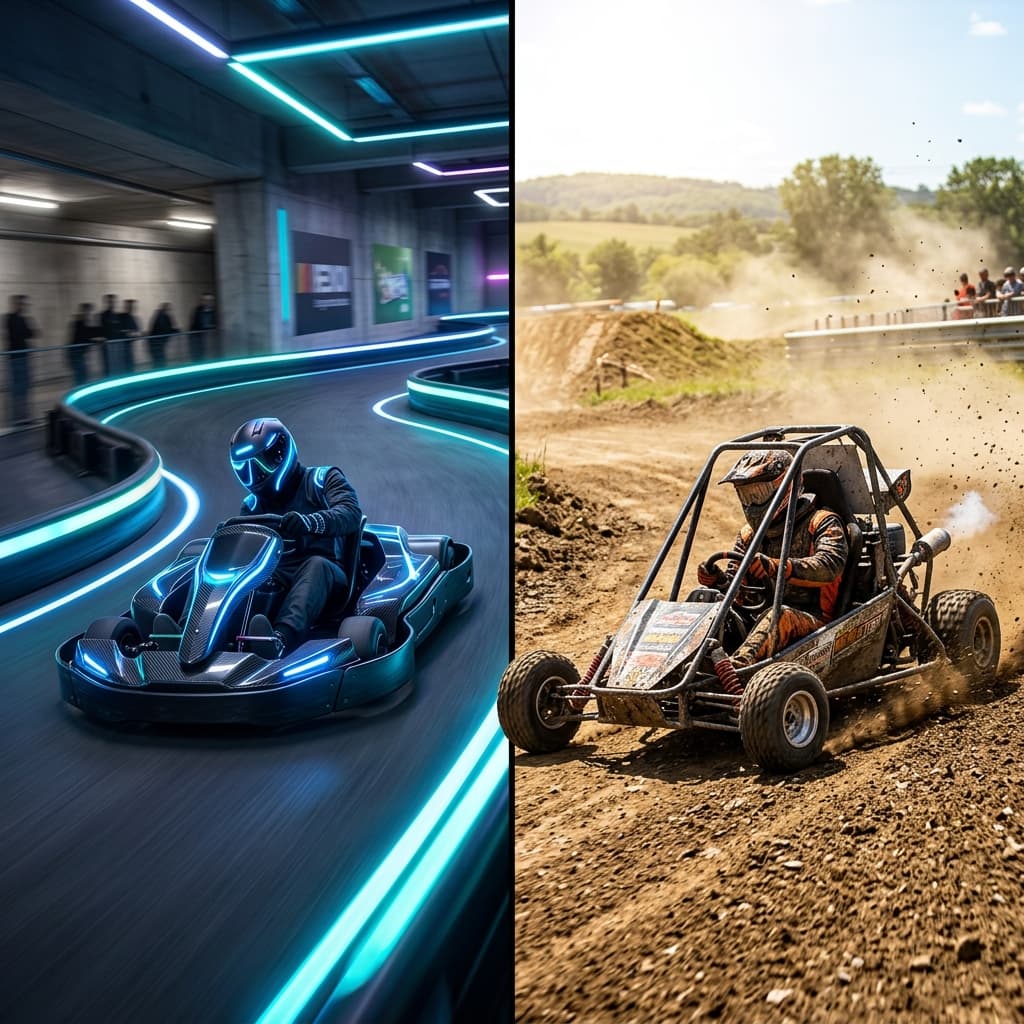
Torque vs. Top Speed: The Definitive Guide to Electric and Gas Go-Karts
The global go-karting landscape is undergoing a massive shift. Compare the physics, costs, and track experiences of electric vs. gas go-karts.
Read GuideRelated Topics