
Last updated: 24 June 2026 · Prices verified from official track websites and booking platforms.
Electric drift karts represent a specialized category of motorsport vehicles designed specifically for controlled sideways sliding rather than traditional racing. These battery-powered machines feature rear-wheel drive systems, low-grip rear tires, and precision steering that allow drivers to maintain extended drifts with real angle and control. Unlike standard go-karts that prioritize straight-line speed, drift karts are engineered from the ground up to deliver a unique driving experience that mimics professional drifting in a compact format. The market offers options ranging from entry-level models for recreational use to high-performance machines capable of exceeding 40 miles per hour. Manufacturers like Electro & Company and BattleAero produce specialized drift karts with motor configurations from 2000W systems for beginners to 10KW setups for experienced drivers. This guide covers every aspect — from the physics of the sideways slide, to the best models on the market, to the technique refinements that separate a beginner from a confident drifter.
1. How Electric Drift Karts Work
Electric drift karts rely on battery-powered motors, specialized steering geometries, and rear-end dynamics to replicate the sliding behavior of full-size drift cars. The integration of these systems allows drivers to initiate and maintain controlled slides without the noise, emissions, or mechanical complexity of gas-powered alternatives.
Understanding the core engineering behind these machines helps explain why electric platforms are so well-suited to drifting — and why the experience feels authentic even at recreational speeds.
Fundamental Components and Systems
An electric drift kart uses several core components that distinguish it from a standard go-kart. The chassis sits extremely low to the ground — typically just a few inches — for stability during high-angle slides. Electric motors mount directly to the rear axle or individual rear wheels, eliminating the need for traditional transmission systems and delivering power more efficiently.
The steering system represents a critical differentiator. Many purpose-built drift karts feature 900-degree steering, which provides the lock-to-lock range necessary for initiating and correcting drifts. This extended range mimics the steering feel of actual drift cars and is a key reason serious drift karts feel so different from standard karts.
Rear wheel geometry determines how easily the kart breaks traction. Some designs incorporate rear-wheel steering mechanisms that assist with drift initiation. Electronic speed controllers manage power delivery from the battery to the motors, enabling the precise throttle response drivers need to modulate slide angles in real time.
- ✓Low-slung chassis design keeps the center of gravity near the ground, reducing rollover risk during aggressive angle changes
- ✓900-degree steering lock-to-lock range enables full counter-steer inputs that standard karts cannot match
- ✓Direct-drive motor-to-axle setup eliminates gear lag for instant, programmable torque delivery
- ✓Electronic speed controllers allow programmable power curves — ideal for learning at lower settings before advancing
The Physics Behind the Sideways Slide
Drift karts achieve sideways motion through intentional rear-wheel traction loss. The driver initiates a drift by turning the steering wheel while simultaneously applying throttle, causing the rear wheels to exceed their grip threshold. Weight transfer during turn-in helps rotate the kart around its center of gravity.
Once sliding begins, the driver balances steering input against throttle position to maintain the desired angle. Countersteering keeps the front wheels pointed toward the exit direction while the rear slides outward. Too much throttle causes the rear to slide wider; releasing throttle allows the kart to regain grip and exit the drift.
Advanced electric drift karts use electric rear-wheel steering to initiate slides without relying solely on tire friction. This technology — currently patent-pending on several next-generation models — reduces tire wear while still providing authentic drift sensations. The low center of gravity inherent to electric platforms enhances stability during transitions between drift angles.
Power Delivery and Battery Technology
Electric drift karts typically operate on 48V to 72V lithium-ion battery systems. Higher voltages support more powerful motors, which translates to stronger acceleration and the ability to break traction more readily. Some high-performance models use 72V systems paired with 3kW motors for substantial performance at the performance end of the spectrum.
Battery capacity determines session length. Smaller packs may provide 20–30 minutes of active drifting, while larger configurations extend runtime to an hour or more. Charge times vary from 2–6 hours depending on battery size and charger specifications.
The instant torque characteristic of electric motors benefits drift applications significantly. Unlike gas engines that require specific RPM ranges for power, electric motors deliver peak torque immediately upon throttle application. This responsiveness allows drivers to modulate rear-wheel speed precisely during slides — which is why electric platforms are considered superior learning tools for drift technique.
- ✓Entry-level 48V systems — suitable for learning fundamentals, top speeds around 20–25 mph
- ✓72V systems — performance tier, top speeds 35–45+ mph, recommended for experienced drivers
- ✓Runtime: 20–30 min (smaller packs) to 60+ min (high-capacity packs) of active drifting
- ✓Charge time: typically 2–4 hours on standard chargers; fast chargers reduce to 60–90 min
2. Electric vs. Gas Drift Karts: Full Comparison
Electric drift karts deliver instant torque and require minimal maintenance, while gas-powered models offer extended runtime and a more visceral driving experience. The choice between them depends on priorities like performance consistency, riding environment, and long-term operating costs.
Performance: Why Electric Wins for Beginners
Electric drift karts provide immediate torque delivery, allowing drivers to initiate and control drifts with precise throttle response. This instant power eliminates the lag common in gas engines and creates more predictable handling characteristics — exactly what a driver developing muscle memory needs.
Gas-powered drift karts generate power through combustion engines that require time to build RPMs. The power delivery feels more gradual and varies with engine temperature and fuel quality. Drivers must account for throttle delay and shifting power bands during drift transitions — adding cognitive load when riders are already managing steering, body position, and slide angle simultaneously.
For skill development and practice environments, electric systems eliminate variables related to engine tuning and fuel mixture, letting riders focus entirely on technique. Gas karts appeal to enthusiasts seeking mechanical engagement and the raw sensory experience of a screaming combustion engine at higher outdoor speeds.
- ✓Torque curve — Electric delivers 100% torque instantly; gas builds gradually through the RPM range
- ✓Weight distribution — Battery packs sit low, improving center of gravity vs. engine-high gas karts
- ✓Session consistency — Electric maintains identical performance until battery depletes; gas power fluctuates with temperature and tuning
- ✓Learning curve — Electric's predictable throttle response is significantly better for beginners
Indoor Use, Noise & Environmental Considerations
Electric drift karts produce zero direct emissions during operation, making them suitable for indoor facilities, residential areas, and locations with air quality restrictions. This is the single biggest practical advantage over gas alternatives — an electric kart you can run in a parking lot at 8pm without violating noise ordinances is infinitely more practical for most buyers.
The noise difference is substantial. Electric motors operate at 60–70 decibels during typical use, comparable to normal conversation levels. Gas engines produce 90–100 decibels or higher, requiring hearing protection and creating significant disturbance in suburban settings. Indoor karting venues running drift sessions are only viable with electric karts — no facility can manage gas fumes in an enclosed space.
Battery production does carry environmental costs through mining and manufacturing processes. However, the operational footprint remains significantly lower than continuous fossil fuel consumption, and many regions now offer renewable energy charging options.
Operating Costs: The True Long-Term Cost of Each
Electric drift karts eliminate oil changes, spark plug replacements, air filter servicing, and carburetor adjustments. The primary maintenance involves tire or drift sleeve replacement, brake pad inspection, and occasional bearing lubrication. Battery packs typically last 3–5 years before requiring replacement.
Gas models demand regular engine maintenance: oil changes every 10–20 hours of operation, spark plug replacement, fuel system cleaning, and periodic valve adjustments. Fuel costs accumulate quickly, and engines require winterization in cold climates.
| Cost Factor | Electric | Gas |
|---|---|---|
| Fuel / Energy per hour | $0.50–$1.50 | $3–$6 |
| Annual maintenance | $50–$100 | $200–$400 |
| Battery / Engine replacement | $400–$800 (every 3–5 yrs) | $300–$600 (every 2–3 yrs) |
| Indoor / residential use | ✓ Yes | ✗ No (fumes + noise) |
| Maintenance skill required | Minimal | Moderate to high |
3. Best Electric Drift Kart Models in 2025
The electric drift kart market spans a wide range — from sub-$500 recreational karts for younger riders to premium $2,000+ performance machines capable of real competitive-level drifting. Here is the definitive breakdown by category, with the key specs, affiliate buy links, and who each model is best for.
| Model | Motor | Top Speed | Max Rider | Best For | Price Range |
|---|---|---|---|---|---|
| Razor Crazy Cart (24V) | 24V / ~350W | 12 mph | 120 lbs / Ages 9+ | Kids — multi-directional drifting | $280–$350 |
| Razor Crazy Cart XL (36V) | 36V / 500W | 17 mph | 240 lbs / Ages 16+ | Adults — best turnkey electric drift kart | $1,100–$1,300 |
| BattleAero Drift Kart | 72V / 3kW | 30+ mph | Adult | Intermediate–Advanced adults | $1,500–$2,500 |
| DriftKart D1 (DriftKart.co) | 48V / custom | 25+ mph | Adult | Skill development & training | $1,800–$2,200 |
| Electro & Company E-Drift Kart | 72V / high-perf | 40+ mph | Adult | High-performance competition | $2,500–$4,000+ |
Razor Crazy Cart Series — Best Entry-Level
Razor remains the dominant brand in consumer drift karts through its Crazy Cart line, which pioneered the mass-market electric drift segment. The Razor Crazy Cart (24V) is the classic gateway model for riders aged 9+, using free-swivelling rear caster wheels controlled by a hand-operated drift bar to enable 360-degree multi-directional slides. Top speed is 12 mph with a 120 lb weight limit.
The Razor Crazy Cart XL is the adult-sized evolution — the most capable turnkey electric drift kart for adults available from a major manufacturer. Its 500W motor running off a 36V system supports riders up to 240 lbs, reaches 17 mph, and delivers up to 40 minutes of runtime per charge. The three-input control system (steering wheel + foot pedal + drift bar) gives experienced riders the tools to execute precision slides, linked drifts, and full 360-degree spins.
For most first-time adult buyers, the Crazy Cart XL is the obvious starting point — it is backed by Razor's established parts supply, has a well-documented learning curve, and is available through major retailers with competitive pricing.
- ✓Crazy Cart (24V) — $280–$350, 12 mph, 120 lbs, ages 9+. Best for kids learning to drift in the driveway.
- ✓Crazy Cart XL (36V / 500W) — $1,100–$1,300, 17 mph, 240 lbs, ages 16+. Only purpose-built adult electric drift kart from a major manufacturer.
- ✓Both use caster-wheel rear systems for multi-directional drifting — 360° spins, diagonal slides, and precise angle control.
- ✓Widely available through Amazon and major retailers with strong warranty support.
BattleAero & DriftKart.co — Performance Mid-Range
BattleAero and DriftKart.co occupy the performance mid-range, bridging the gap between recreational karts and full-competition machines. These are the models for riders who have outgrown entry-level speeds and want authentic, car-style rear-wheel drive drift dynamics rather than the caster-wheel mechanism of the Razor range.
BattleAero Drift Kart: Built around a 72V / 3kW motor system, the BattleAero delivers strong acceleration and the torque needed to break traction on demand. Enhanced steering systems provide precision control at higher drift angles. Pricing typically falls in the $1,500–$2,500 range depending on configuration and any rolling-chassis upgrades.
DriftKart D1 (DriftKart.co): The D1 is specifically engineered as a training-first machine. It features 900-degree steering for full counter-steer range and a programmable e-brake mode that simulates handbrake function without locking the tires completely. This makes it significantly more effective for skill development compared to the Razor series, and it is the choice for riders who want to translate their drifting skills into real-car technique.
- ✓BattleAero — 72V / 3kW, 30+ mph, adult. Enhanced RWD steering for precision drift control. ~$1,500–$2,500.
- ✓DriftKart D1 — 900° steering, programmable e-brake mode, purpose-built for skill transfer to real-car drifting. ~$1,800–$2,200.
- ✓Both use traditional rear-wheel drive with low-traction rear tires — closer to real car drifting than caster-wheel designs.
- ✓Suitable for adults who have mastered entry-level karts and want to advance to higher-speed, more technical drifting.
4. Key Features to Look For When Buying
Electric drift karts require specific engineering characteristics to deliver authentic drifting performance while maintaining safety and durability. These are the specifications that genuinely matter — and the ones manufacturers use as marketing padding without delivering real drift capability.
Motor Power and Speed Settings
Motor power directly determines a drift kart's ability to break traction and maintain controlled slides. Most performance-oriented models use motors ranging from 1,000W to 3,000W, with the top-tier competition models reaching 10KW.
Look for karts with programmable speed modes — this is an underrated feature for skill development. Lower power modes help newcomers learn weight transfer and steering inputs without excessive wheel spin. Higher settings enable experienced operators to execute aggressive angle changes and sustained drifts. A kart without variable power settings forces you to run full power before you are ready, which makes learning significantly harder.
Battery voltage also impacts performance characteristics: 48V systems provide adequate power for learning, while 72V configurations deliver the torque needed for competitive-level sliding.
- ✓Minimum 1,000W for meaningful rear traction break — sub-1000W karts struggle to initiate real drifts
- ✓Programmable speed modes are essential for beginners — allow safe progression from low to full power
- ✓48V systems: ideal for learning and intermediate drifting
- ✓72V systems: performance tier — required for 30+ mph slides and sustained drift angles
Chassis, Steering, and Build Quality
Build quality determines whether a drift kart handles like a training tool or an expensive toy. The key specifications to verify before buying:
Steering range: 900-degree lock-to-lock is the benchmark for authentic drift steering. Standard go-karts typically offer 180–270 degrees, which is entirely insufficient for the counter-steer inputs that drifting requires.
Frame material: Steel tube construction handles repeated wall contacts and aggressive riding; aluminum is lighter but may require reinforcement for high-impact use. Plastic-chassis karts (common in the sub-$500 range) are suitable for casual use but deteriorate quickly under sustained drift sessions.
Wheelbase: Longer wheelbase increases stability at speed; shorter configurations enable tighter transitions. Adjustable rear track width lets operators fine-tune handling balance.
- ✓900° steering: non-negotiable for authentic drifting — less than this severely limits counter-steer capability
- ✓Steel tube or aluminum frame: required for adult riders and any serious repeated use
- ✓Adjustable seating: important for proper ergonomics during extended sessions — prevents fatigue-related handling errors
- ✓Rear-end geometry is more important than top speed — a kart that slides predictably at 20 mph is more valuable than one that's fast but unpredictable
Safety Features That Actually Matter
Protective equipment and design elements minimize injury risk during high-speed slides and impacts. When evaluating a drift kart for purchase, prioritize these safety elements:
Emergency kill switch accessible from the driver's seat without reaching — this is a mandatory safety feature, not optional.
Low center of gravity: A well-designed drift kart should sit close enough to the ground that rollover in normal operation is mechanically unlikely. If a kart sits high, treat this as a red flag.
Reliable mechanical brakes independent of motor regenerative braking. Regenerative braking alone is insufficient for emergency stops — you need a dedicated mechanical system that works even if the motor controller fails.
Foot guards preventing contact with moving wheels during slides, when the driver's legs naturally shift under lateral G-forces.
- ✓Emergency kill switch reachable from driving position — mandatory, not a bonus feature
- ✓Mechanical brakes independent of regenerative system — critical safety redundancy
- ✓Low center of gravity design — karts sitting more than 12 inches from the ground carry increased rollover risk
- ✓Foot guards, side impact panels, and roll protection are standard on competition-grade karts; verify their presence on any adult model
5. Riding Techniques: Beginner to Advanced
Mastering drift technique requires understanding how to initiate slides and maintain control through steering inputs and throttle modulation. Electric drift karts demand precise timing and smooth inputs — aggression without finesse results in spins, not slides. The techniques below progress from the most accessible entry methods to advanced linked maneuvers.
Basic Drift Initiation Methods
Handbrake Entry — The most straightforward entry for new riders. Approaching a corner at moderate speed, pull the handbrake while simultaneously turning the steering wheel into the desired direction. This breaks rear traction and begins the slide. On karts like the DriftKart D1 with programmable handbrake mode, this can be simulated electronically without locking the tires completely.
Weight Transfer Entry — Quickly lifting off the throttle before a turn shifts weight forward onto the front wheels, unloading the rear. Immediately reapply power as the kart begins to rotate. This technique requires clean, decisive throttle inputs rather than tentative half-measures.
Power-On Entry — Best suited to riders comfortable with throttle control. Maintain steady throttle through corner entry, then add more power to break rear traction. This method requires understanding the kart's power delivery curve and tire grip limits before attempting — it is easy to spin out if the throttle input is too aggressive.
Advanced Control: Countersteering, Throttle Modulation, and Linking Drifts
Countersteering is the foundational skill of drift control. As the rear end slides out, steer opposite to the drift direction — if the rear is swinging right, steer left — to maintain balance and control the angle. Real drift training systems feature 900° steering input specifically to practice the full countersteer range required for high-angle slides. The earlier and smoother your countersteer, the longer and more controlled the drift.
Throttle Modulation extends drift duration and adjusts the angle mid-corner. Adding throttle increases drift angle and speed; reducing throttle tightens the line. Feathering the throttle — making small, rapid adjustments — creates smooth, controlled transitions between drift states. This is the skill that separates genuine drifters from riders who simply spin out.
Linking Multiple Corners requires maintaining momentum between transitions. Exit one drift and immediately initiate the next without fully straightening. This demands precise timing of steering reversal and throttle application — the transition window is typically under 0.5 seconds at speed, requiring instinctive rather than conscious input.
- ✓Countersteer early and smoothly — late corrections cause snap spins, not recoveries
- ✓Throttle modulation is the real skill: 5–10% throttle change can mean the difference between holding and losing a drift angle
- ✓Linked drifts require the exit of one drift to set up the entry of the next — never fully straighten between transitions
- ✓Consistent practice on the same corner is more effective than random open-area sliding for building muscle memory
6. Safety Tips and Best Practices
Proper safety equipment, appropriate riding locations, and thorough equipment checks form the foundation of safe electric drift kart operation. At the speeds these machines operate, even a seemingly minor impact can cause significant injury without the right protective gear.
Protective Gear: What You Actually Need
A properly fitted helmet represents the most critical piece of safety equipment. It should meet DOT, CPSC, or ASTM safety certifications and fit snugly without sliding during movement. For electric drift karts capable of 30+ mph (BattleAero, Electro & Company tier), a full-face helmet is strongly recommended — not just an open-face bicycle helmet.
Beyond head protection, riders need: - Knee and elbow pads for protection during falls or impacts - Closed-toe shoes with good grip to prevent foot injuries and ensure proper pedal control - Gloves for steering wheel grip and hand protection in the event of a slide-off - Long pants and long-sleeved shirts as a minimum — Nomex racing suits for serious track use
Parents should verify that all protective equipment fits correctly before allowing younger riders to operate a drift kart. Helmets that are too large rotate on impact and provide significantly reduced protection.
- ✓Full-face helmet — DOT/ASTM certified; full-face is required for 30+ mph models
- ✓Knee and elbow pads — especially important for beginners who will make more technique errors
- ✓Closed-toe shoes — sandals or open footwear create serious foot injury risk near rotating wheels
- ✓Gloves — improve grip and protect hands from abrasion during low-side slides
Safe Riding Environments and Pre-Ride Checks
Open, paved areas away from traffic provide the ideal setting for drift kart operation. Parking lots, tennis courts, and dedicated karting facilities offer smooth surfaces with adequate space for maneuvering. A minimum clear zone of 10–15 feet around the riding perimeter prevents collisions with fixed objects during unexpected angle changes.
Riders should avoid areas with pedestrians, obstacles, or irregular surfaces. Wet or oily pavement dramatically increases the risk of uncontrolled sliding and should be treated as a no-go condition until skill level is high enough to manage it intentionally.
Pre-ride inspection checklist:
- ✓Battery charge level — verify before every session; low battery can affect braking and motor performance
- ✓Tire pressure and tread or drift sleeve condition — worn drift surfaces change slide behavior unpredictably
- ✓Brake function — test in a stationary position before moving; any sponginess requires immediate attention
- ✓Steering mechanism — check for looseness or binding that could cause unexpected behavior at speed
- ✓All bolts and fasteners — especially rear axle mounting, seat mounts, and steering column hardware
- ✓Battery connections — secure, dry, and free of corrosion before every ride
7. Customization and Performance Upgrades
Electric drift karts offer extensive modification potential through performance enhancements, visual customization, and specialized accessories. Enthusiasts can transform base models into personalized machines tailored to their specific drifting style and performance requirements.
Performance Modifications That Make a Real Difference
Motor and controller upgrades represent the most impactful performance modifications. Upgraded controllers can support dramatically higher wattage — some configurations supporting over 25,000W — for enhanced drifting speed and torque. Battery system improvements extend runtime and deliver more consistent power delivery during extended sessions.
Tire selection dramatically influences drift initiation and control. Harder compound rear tires facilitate easier slide initiation, while softer compounds provide more grip for controlled transitions. Many riders experiment with different tire pressures and widths to find optimal balance for their weight and the surface they most often ride on.
Suspension upgrades — where applicable — affect drift characteristics significantly. Adjustable coilovers allow riders to dial in specific ride heights and damping rates for their preferred surface conditions. Upgraded bushings and mounting hardware reduce chassis flex and improve steering response during aggressive maneuvers.
- ✓Controller upgrades — the highest return-on-investment modification; transforms mid-range karts to near-performance spec
- ✓Tire compound selection — harder rear compound = easier slide initiation; softer = more grip but slower initiation
- ✓Battery upgrades — extended capacity improves session length; high-discharge cells improve peak power delivery
- ✓Suspension mods (where available) — ride height and damping tuning for different surfaces and riding styles
Aesthetic Upgrades and Accessories
Beyond performance, the electric drift kart customization scene has developed a strong aesthetic modification culture. Body kits, custom panels, and vinyl wraps allow riders to create distinctive looks that reflect individual style. LED lighting systems are popular for evening or low-light riding — and many riders use them to create visible drift trail effects in photographs.
Chassis-mounted rear wings add functional downforce at higher speeds while creating an aggressive racing aesthetic. These components typically bolt directly to frame mounting points without requiring permanent modifications. Seat upgrades improve comfort during longer sessions and add personalization through different colors and materials.
For riders who want data-driven improvement, digital displays and telemetry upgrades provide real-time performance data including speed, battery voltage, motor temperature, and drift angle — information that can be analyzed after sessions to identify specific areas for technique improvement.
8. Community, Events, and Future Trends
Electric drift karts have sparked a dedicated global community of enthusiasts who gather both online and at organized events. The industry continues to evolve rapidly, with technological advancements addressing the key remaining limitations — primarily tire wear, session length, and the learning curve for new riders.
Events, Online Forums, and Social Communities
Drift karting competitions have expanded from small local gatherings to structured events that attract participants internationally. These events typically feature timed runs, tandem battles, and technical challenges that test riders' ability to maintain angle and control through designated courses.
Many skateparks and parking lots now host drift kart meetups where riders practice techniques and share setup configurations. Organized competitions often include categories for beginners, intermediates, and advanced riders, making the sport accessible regardless of experience level. International events have begun incorporating electric drift kart exhibitions alongside traditional motorsport demonstrations.
Online communities are the primary knowledge-sharing hub. Dedicated forums feature sections for troubleshooting electrical systems, discussing battery upgrades, and sharing session footage. Social media groups on Facebook and Reddit contain thousands of members who post setup adjustments, recommended parts suppliers, and practice location databases. YouTube channels dedicated to electric drift karting provide maintenance guides, performance comparisons, and technique tutorials.
Innovations Shaping the Next Generation of Electric Drift Karts
Recent technological developments focus on improving battery efficiency, motor responsiveness, and — critically — reducing tire wear. Patent-pending electric rear-wheel steering systems allow slides to be initiated without relying solely on tire friction, addressing one of the primary ongoing costs of traditional drift practice.
Manufacturers are incorporating regenerative braking systems that recover energy during slides and deceleration, increasing overall range per charge. Modular designs allow riders to swap components quickly, enabling customization for different skill levels and terrain types without full machine replacement.
Advanced telemetry systems are being integrated into higher-end models, providing real-time data on drift angles, speed, and battery consumption that riders can analyze post-session to identify specific technique improvements. As the technology matures and production volumes increase, expect the premium performance tier ($2,500–$4,000) to become the new mid-range within 2–3 years.
- ✓Electric rear-wheel steering — initiates drifts without tire friction; dramatically reduces rear tire wear costs
- ✓Regenerative braking during drift transitions — increases session length without larger battery packs
- ✓Real-time telemetry: drift angle, motor temp, battery voltage — turning practice sessions into analyzable data
- ✓Modular component design — swap motor tiers as skills develop without replacing the entire chassis
Frequently Asked Questions
What features should adults look for when choosing an electric drift kart?+
How do battery capacity and motor power affect performance and session length?+
What is the typical price range for a quality electric drift kart?+
What safety gear is recommended for adult electric drift kart riders?+
How do you maintain the rear tires or drift sleeves to keep drifting consistent?+
Are conversion kits available to turn a regular go-kart into a drift kart?+
Can kids use electric drift karts, and at what age is it safe?+
Whether you are buying your first electric drift kart for weekend fun, developing real drifting technique with a training-focused machine, or chasing 40+ mph competition performance, the 2025 market has a purpose-built solution. The Razor Crazy Cart XL remains the best turnkey entry point for adults; the DriftKart D1 and BattleAero bridge the performance gap; and the Electro & Company E-Drift Kart sits at the pinnacle for serious performance buyers. Find the best go-karting venues near you — many now run dedicated electric drift sessions for an authentic track experience.
Find Drift Karting Venues Near MeContinue Reading
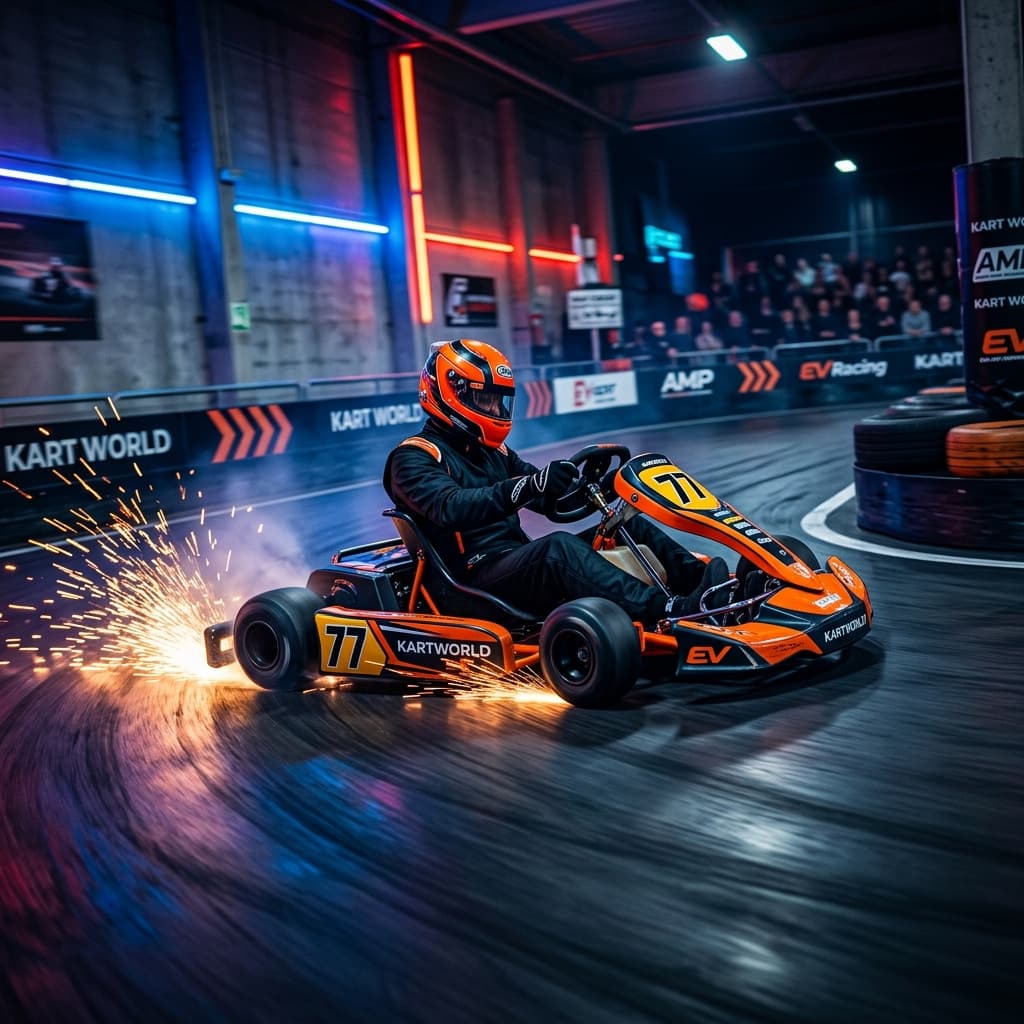
The Ultimate Guide to Drift Karts: Everything You Need to Know About Going Sideways
Drift karts are precision machines engineered from the ground up to break traction on demand. This definitive guide covers how they work, every model from $280 Razor entry-level to $4,000+ Electro & Company performance karts, safety essentials, and how to master the art of the controlled slide.
Read Guide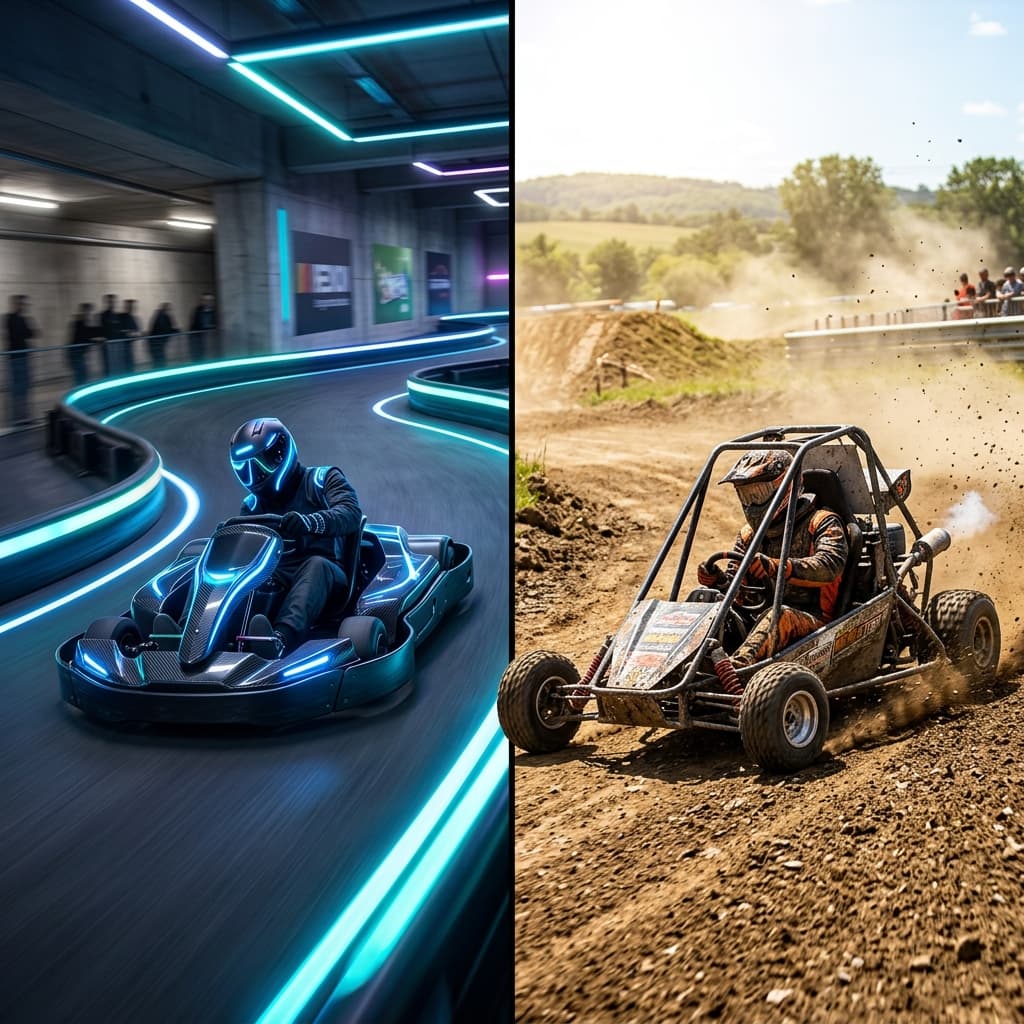
Torque vs. Top Speed: The Definitive Guide to Electric and Gas Go-Karts
The global go-karting landscape is undergoing a massive shift. Compare the physics, costs, and track experiences of electric vs. gas go-karts.
Read GuideRelated Topics